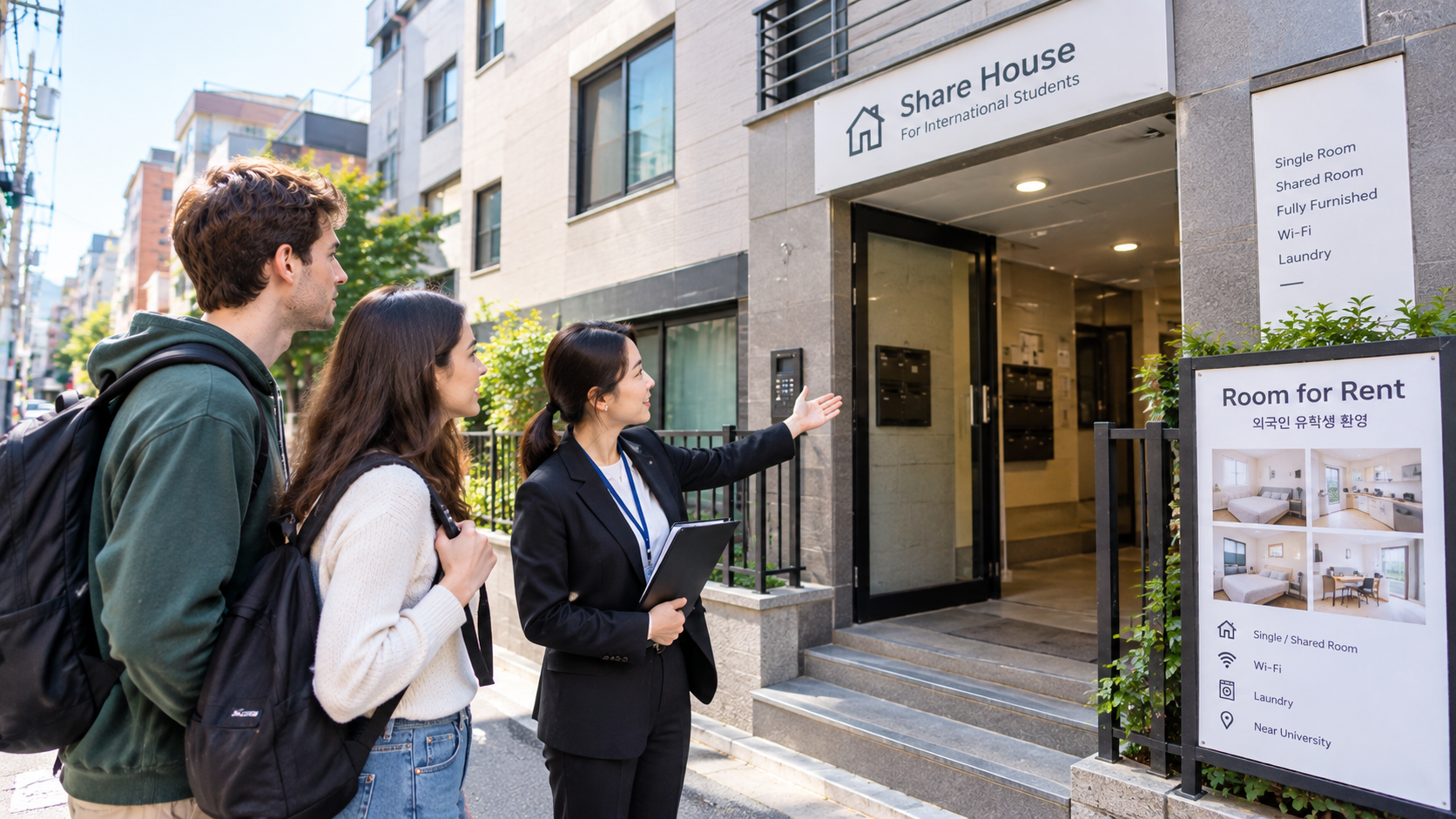
1. Understand Korea’s Rental Options
Before renting in Korea, it’s helpful to understand the differences between a one-room apartment and a goshiwon or goshitel.
- Wolse (Monthly Rent with a Deposit): A typical one-room rental involves paying monthly rent and an upfront security deposit (bojeunggeum). Deposit amounts vary widely depending on the location, property, and rental terms. The deposit is generally refundable at the end of the lease, subject to contractual deductions, but repayment is not guaranteed if the landlord fails to return it.
- Goshiwon / Goshitel (Budget Accommodation): These are small, often furnished rooms that may require little or no security deposit. Monthly prices and included services vary by location and building. Some provide Wi-Fi, utilities, or shared kitchen facilities, while others charge separately.
Safety Tip: Before paying a large deposit, check the property’s legal status and ask whether deposit protection or a rental deposit return guarantee is available for your situation.
2. Use Housing Apps and Websites to Compare Options
Online platforms can help you explore rental options before visiting properties in person. However, listing details may be incomplete or outdated, so always verify important information independently.
- Zigbang (직방) and Dabang (다방): Popular Korean housing platforms where you can search for one-room apartments and other rental properties. Listings may include photos, prices, and location information. Some features may require Korean-language assistance.
- Goshipages: A website focused on small-room accommodation, including goshiwons. Check whether listings are current and confirm prices and availability directly with the accommodation provider.
- Craigslist Seoul: An additional place to explore shared housing and private rental listings. Because listings are posted by individual users, independently verify the property and the person offering it.
Important: Never assume that a listing is verified or that a property is safe simply because it appears on a well-known platform.
3. Check These Red Flags Before Renting in Korea
When renting a one-room apartment or goshiwon in Korea, take these precautions to reduce the risk of rental scams and unexpected costs.
(a) Avoid Paying Before Verifying the Property
Be cautious if someone pressures you to send a deposit before viewing the room or verifying the property and the person offering it. If you are searching from overseas, consider arranging temporary accommodation while you inspect rental options.
(b) Check the Property’s Ownership and Legal Status
For a one-room rental, review a recent Real Estate Register (등기사항증명서) to check the registered owner, mortgages, and other registered rights. Verify the landlord’s identity and authority to rent the property. If a representative signs on the landlord’s behalf, request appropriate proof of authorization.
(c) Confirm the Total Monthly Cost
Ask about maintenance fees (gwanlibi, 관리비), utilities, internet charges, and any additional expenses. Make sure the payment amounts and included services are clearly stated in the rental agreement.
(d) Get Important Promises in Writing
Do not rely solely on verbal assurances about repairs, furniture, deposit refunds, or move-out conditions. Ask for important agreements to be included in the written contract.
Final Checklist Before Signing a Lease
Before committing to a rental property in Korea, make sure you have:
- Verified the landlord’s identity and the property’s ownership.
- Reviewed the rental deposit, monthly rent, maintenance fees, and other charges.
- Checked the written contract and confirmed any important agreements.
- Asked questions about anything you do not fully understand.
Taking these precautions can help you make a more informed decision when renting in Korea.
Need help finding a trustworthy real estate agent? Read our guide to real estate agents in Korea to learn how to check broker credentials and find foreigner-friendly services.