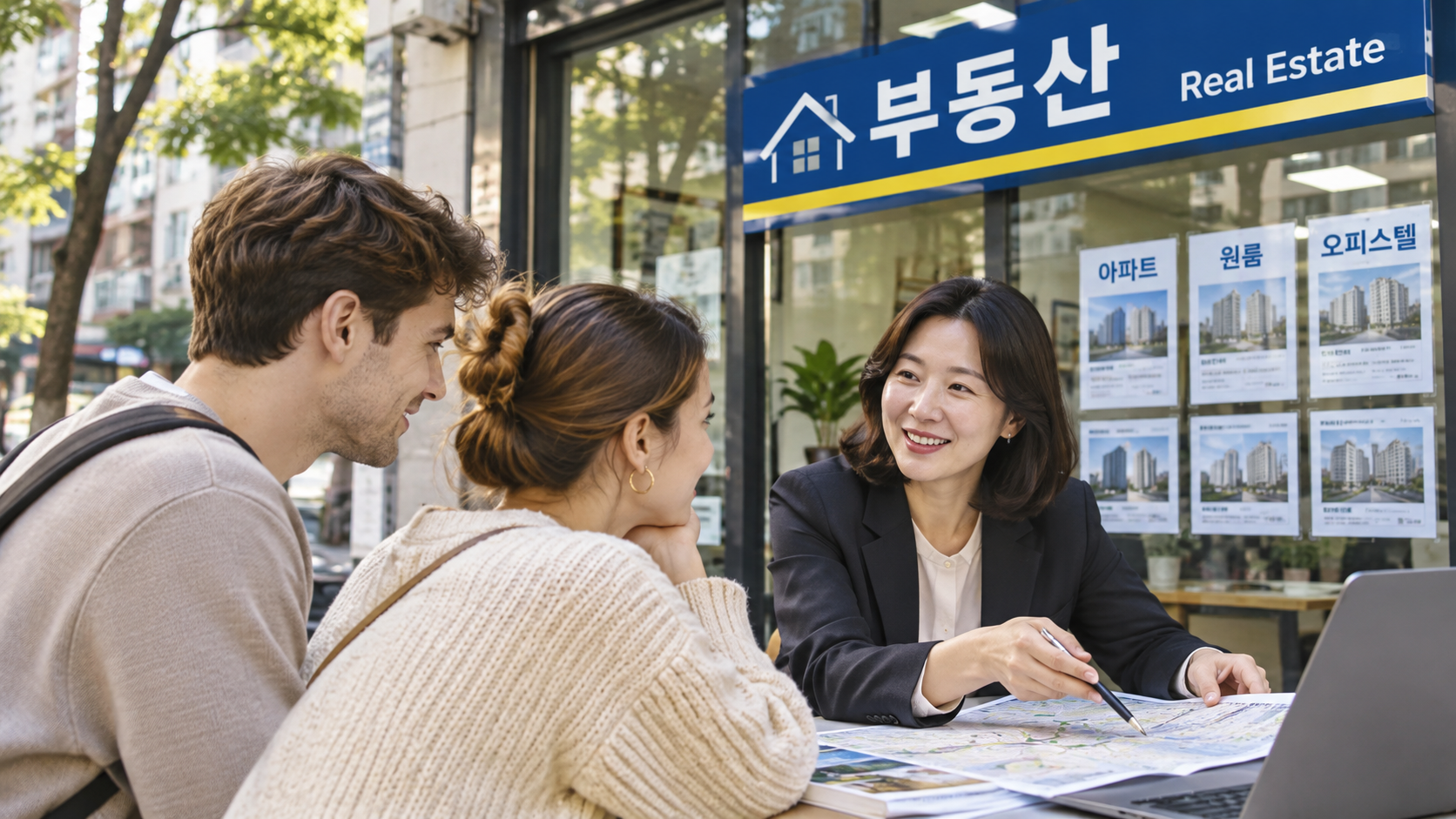
Finding trustworthy real estate agents in Korea can be challenging for foreigners, especially if you’re unfamiliar with the local rental system. Before signing a housing contract, it’s important to understand who is legally authorized to handle real estate transactions and where to find reliable assistance.
Here are three essential tips to help you work with real estate agents in Korea and avoid common mistakes when renting a home.
1. Real Estate Agents in Korea: Licensed Brokers vs. Assistants
Not everyone working in a Korean real estate office has the legal authority to handle your contract.
- Check the Broker’s Credentials: A licensed real estate agent (공인중개사, gongin junggaesa) is qualified to handle real estate transactions. A brokerage assistant (중개보조원, junggae bojowon) may help with property viewings and administrative tasks but cannot independently perform duties reserved for licensed brokers.
- Verify the Contract and Insurance: Before signing, confirm that the brokerage is properly registered and that the responsible licensed broker signs and stamps the contract. Ask for proof of the broker’s professional liability coverage. This coverage may apply to losses caused by the broker’s misconduct or negligence, but it does not automatically protect your rental deposit against every type of fraud or landlord default.
2. Find a Seoul-Designated Global Real Estate Agency
If you are not confident speaking Korean, Seoul’s Global Real Estate Brokerage Offices program can help you find licensed brokers who offer consultations in foreign languages.
- Language Support: Participating offices may offer consultations in English, Chinese, Japanese, or other languages. Available languages vary by office, so check before visiting.
- Rental Guidance: Designated brokers can explain important aspects of Korean rental contracts, including Jeonse (large lump-sum deposit), Wolse (monthly rent), and precautions related to rental deposits.
- Find an Office: Check the official Seoul Global Real Estate Agency directory for participating offices and contact information.
Important: Official designation does not guarantee that a property or rental contract is risk-free. Always verify the property’s ownership and legal status before signing.
3. Where to Find Foreigner-Friendly Real Estate Services in Seoul
If you’re unsure where to begin your housing search, the following resources may help you explore rental properties and connect with real estate professionals in Seoul.
- Seoul Homes: An English-language property listing platform featuring apartments, studios, and other housing options from participating real estate professionals and property owners.
- Hometown Realty: A real estate service focused on international residents, expatriates, and corporate relocations, particularly in areas such as Yongsan, Hannam, and Itaewon. Its listings tend to include higher-end rental properties.
- Seoul Global Real Estate Agency Directory: An official resource for finding designated real estate brokerage offices offering foreign-language assistance.
Before choosing an agency: Compare multiple properties, confirm the broker’s registration, and ask about deposits, maintenance fees, and brokerage fees before signing a contract.
These resources are provided for informational purposes, not as endorsements. Always verify the brokerage and property details independently.
Important Tip: Check the Property Before Signing
Before signing a rental contract, ask the licensed broker to explain the Property Disclosure Statement (중개대상물 확인·설명서) and review a recent Real Estate Register (등기사항증명서).
Check that the landlord’s identity matches the registered owner, and look for mortgages or other registered rights that could affect your deposit.
If anything is unclear, ask for an explanation before signing or paying a deposit.
Looking for a place to live in South Korea? Check out our guide to finding safe apartments, one-rooms, and goshiwons in Korea for more practical housing tips.